
 ORDERED BY 5 PM, DELIVERED ON
  FREE POSTAGE FROM CHF 150
  LOCATION SWITZERLAND


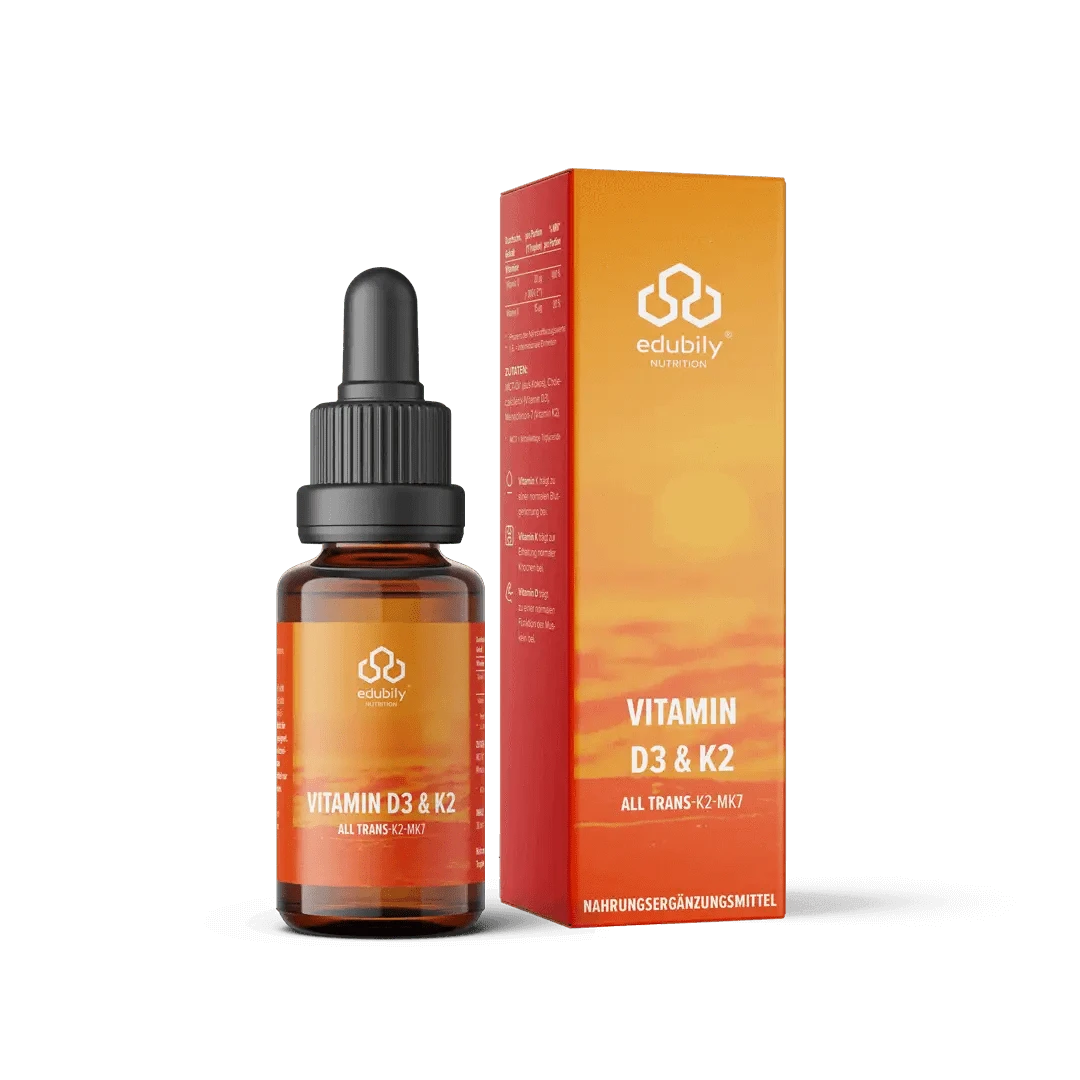


- Vitamin D & K in the optimally bioavailable forms
- Vitamin D3 in the form of cholecalciferol
- And vitamin K2-MK7 in the all-trans form
- Vitamin D andSupports the immune system, bone metabolism and muscle function
- Dissolved in coconut oil-based MCT oil - no further additives
- Simple, needs-based dosing with 800 I.E. (20 µg) vitamin D3 and 15 µg vitamin K2 per drop
- Vegetarian
- Laboratory tested for heavy metals
- On the Cologne List®
- Contents: 30 ml = 1020 servings
Vitamin D3 drops from Edubily
Vitamin D3 is an essential nutrient that plays a crucial role in the body. It contributes to the normal absorption and utilization of calcium and phosphorus, thereby significantly contributing to the maintenance of healthy bones. The body needs vitamin D to utilize calcium efficiently. Vitamin D also contributes to the maintenance of normal muscle function and the normal function of the immune system.
Edubily uses only a few raw materials in its vitamin D range: it contains only cholecalciferol (vitamin D) and coconut oil-based MCT oil, as well as vitamin K2-MK7 in the all-trans form; no other additives. Easy to dose with the pipette: One drop contains 20 µg (= 800 I.E.) Vitamin D and 15 µg vitamin K2.
Officially approved health claims for vitamin D
The following health claims are approved for vitamin D:
- Vitamin D contributes to the normal absorption and utilization of calcium and phosphorus
- Vitamin D contributes to the maintenance of normal calcium levels in the blood
- Vitamin D contributes to the maintenance of normal bones
- Vitamin D contributes to the maintenance of normal muscle function
- Vitamin D contributes to the maintenance of normal teeth
- Vitamin D contributes to the normal function of the immune system
- Vitamin D has a function in cell division
- Vitamin D contributes to reducing the risk of falls associated with postural instability and muscle weakness
- Vitamin D is needed for normal growth and development of bones in children
- Vitamin D contributes to the normal function of the immune system in children
Supplemented with vitamin K2
This product also contains vitamin K. Some sources suggest that vitamin D may influence vitamin K requirements, in part because it supports the formation of certain vitamin K-dependent proteins such as osteocalcin.
For its product, Edubily uses vitamin K2-MK7 in the so-called all-trans form – a form that also occurs naturally in fermented foods. This structure is considered particularly stable and easily absorbed. Unlike synthetic mixed forms with cis isomers, studies have shown that the all-trans form is more readily available in the body and stays in the blood longer.
According to official health claims, vitamin K contributes to normal blood clotting and the maintenance of normal bones.
Frequently Asked Questions & Answers from Edubily
Does vitamin D need to be combined with vitamin K2?
Not essential, but useful. If you want a supplement without vitamin K2, then check out the Vitamin D3 as drops or capsules to.
Is vitamin D3 vegetarian or vegan?
Vitamin D3 is vegetarian, but not vegan.It is obtained from wool fat (lanolin) from sheep.
Can I add vitamin D3 to food or drinks?
Theoretically, yes, but taking it directly into the mouth is more advisable. This allows the vitamin D3 to be absorbed through the mucous membranes, which can promote more effective absorption.
How much vitamin D is in food?
Vitamin D is present in very small amounts in the diet, usually covering only 10-20% of the body's needs. Foods with significant amounts of vitamin D include fatty fish (salmon, herring, and mackerel).
It is almost impossible to cover your vitamin D needs exclusively through diet.
Isn't it enough if I stay in the sun?
The intensity of solar radiation in our latitudes between October and March is not sufficient to produce enough vitamin D. Supplementation may therefore be beneficial.
How long does the vitamin D storage from summer last?
In short: not at all. Studies show that vitamin D levels in Europe are inadequate, especially during the winter months. A 2015 study by the Robert Koch Institute found that 80% of Germans don't even reach the recommended 20 ng/ml – and 30 ng/ml is even rarer. Despite this significant undersupply, the problem is often downplayed in Germany.
What is an optimal vitamin D level?
Information on optimal vitamin D levels varies depending on the source. According to the Robert Koch Institute, a level of approximately 20 ng/ml (50 nmol/l) is considered sufficient. However, several professional societies, including the Endocrine Society and vitamin D discoverer Michael F. Holick (recent publication in Nature), recommend at least 30 ng/ml (75 nmol/l) to maximize the positive effects on calcium, bone, and muscle metabolism.
How does body weight affect vitamin D dose?
Body weight has a direct impact on vitamin D requirements. First, adipose tissue can serve as a "storage" for vitamin D, making it less available in the blood. Second, the requirement increases with increasing body mass. Studies show that severely obese people need up to two to three times more vitamin D, while overweight people should, on average, consume about 50% more.
How much vitamin D should one-year-olds get?
A recent article in the renowned journal Nature recommends a daily intake of 400 to 1,000 IU for infants up to one year. For babies and children, we also have a specially tailored preparation from Edubily in our range. This allows for safe and easy dosing for children.
Can you overdose on vitamin D?
Theoretically, yes, but in practice, this is rare. Vitamin D is one of the safest vitamins because it is naturally produced in very high amounts in the skin during the summer through sun exposure. A dose of around 10,000 IU, often considered high, can be produced by the skin in just a few minutes. The body therefore has mechanisms to cope with high doses. However, very high doses of more than 10,000 IU per day for extended periods should be avoided.
Can you take vitamin D3 during pregnancy?
Yes! Studies show that up to 4,000 I.E. per day are safe.
Nutritional values
| Contents | per serving (= 1 drop) | % NRV* |
|---|---|---|
| Vitamin D3 | 20 µg (= 800 I.E.**) | 400% |
| Vitamin K | 15 µg | 20% |
* Percent of nutrient reference values
** I.E. = International units
Ingredients
MCT oil* (from coconut), cholecalciferol (vitamin D3), menaquinone-7 (vitamin K2).
*MCT = medium-chain triglycerides
Recommended intake: Take 1 pipette drop per day with a meal.
Notes: Do not exceed the stated recommended daily intake. This product is not a substitute for a balanced and varied diet and a healthy lifestyle. Keep out of reach of small children. Store in a cool, dry, and dark place. Shake bottle gently before use.
Not suitable for children and adolescents under 18 years of age. People taking coumarin-type anticoagulants should only use vitamin K supplements after consulting a doctor.

Quality & safety at the highest standard
Edubily attaches great importance to developing and manufacturing products on a scientifically sound basis. Their production is carried out by experienced partners in Germany and Austria, who are regularly inspected without notice and are certified according to IFS Food and HACCP. This means that Edubily meets strict hygiene and safety requirements. Furthermore, all products are retested in independent laboratories for factors such as heavy metals, nutrient content, and possible contaminants. Edubily's goal is not to simply offer any nutritional supplements, but rather safe and effective ones that promote health and well-being through well-thought-out formulations and continuous development. This way, fitness athletes and health-conscious individuals can be assured of receiving a high-quality and responsibly designed product.